Understanding the Game of Monopoly
Monopoly, a timeless classic board game, has captured the hearts of players around the globe for decades. Its ability to simulate economic strategy and financial acumen has made it a staple in homes and gatherings, transcending generations.
The Origins of Monopoly
The genesis of Monopoly dates back to the early 20th century. It was initially intended to be a teaching tool to elucidate the intricacies of the economic theory of land monopolies. Designed by Lizzie Magie, The Landlord's Game was the precursor to the modern Monopoly. The central premise revolved around buying, trading, and renting properties to amass wealth, closely mirroring real estate market dynamics.
As the game gained traction, it evolved over time through various iterations, ultimately resulting in the version widely recognized today, with its colorful properties, railroads, and utilities. It was Charles Darrow who, during the Great Depression, repackaged the game, and his version caught the eye of Parker Brothers, leading to the widespread commercialization of Monopoly.
The Mechanics and Appeal of Monopoly
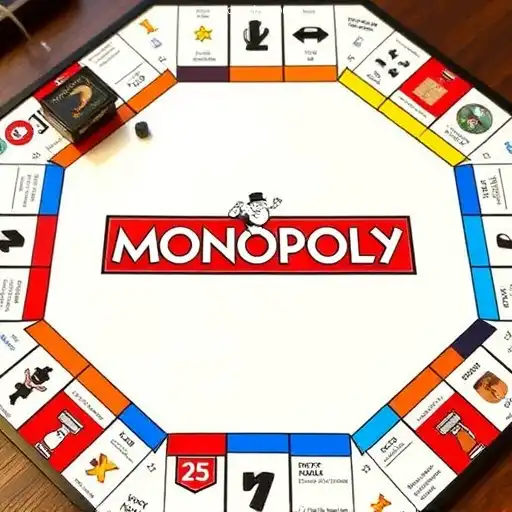
At its core, Monopoly is a game of strategy with a sprinkle of luck. Players traverse a square board replete with properties, and much like in real life, they engage in transactions, buy, sell, trade, and manage resources to maintain liquidity. The game encourages players to think several moves ahead, weighing options and calculating probabilities.
Monopoly's Role in Economic Education
Though initially conceived as an educational tool, Monopoly remains a valuable resource to facilitate understanding fundamental economic principles. Concepts such as taxation, mortgage, bankruptcy, and negotiation are at the forefront of gameplay, providing insights into the ebb and flow of capital.
Interestingly, Monopoly embodies various economic dilemmas, allowing players to experience the pressures and consequences of financial decisions within a controlled environment. It showcases the impact of monopolistic dominance on market conditions, often resulting in disparities between players.
Monopoly's Enduring Popularity
A critical aspect of Monopoly's enduring popularity is its adaptability. Today, countless themed editions captivate diverse audiences, from movie franchises to bespoke regional versions. This ability to adapt has kept the game relevant, appealing to both nostalgic players and new audiences seeking contemporary connections.
Linking Digital and Traditional Formats
In today's digital age, the proliferation of online platforms offers avenues for new experiences reminiscent of traditional games. Online adaptations, such as the QQPG cassino online licenciado com 2.500+ jogos certificados, bônus R$ 5.000🍀, provide players with a spectrum of games to explore, reflecting the innovation occurring within the gaming world. These platforms offer seamless transitions from physical board games to virtual environments, inviting a broader audience to engage with classic economic simulators like Monopoly.
Challenges Faced by Monopoly
Despite its widespread acclaim, Monopoly is not without its challenges. Critics often highlight the game’s tendency to drag on, sometimes lasting hours without a clear victor. The luck involved in dice rolls and card draws can overshadow skill, leaving outcomes to chance rather than strategic prowess.
Additionally, the monopoly strategies that lead to success can also engender feelings of frustration, especially among younger players who may not fully grasp the complex mechanics or the patience required for a long game.
Monopoly's Cultural Impact
Beyond its technicalities, Monopoly's cultural significance is undeniable. From family game nights to competitive tournaments, Monopoly acts as a social catalyst, bridging people through shared experiences. Its influence extends beyond the confines of the board, embedding itself in popular culture as a symbol of capitalism and entrepreneurial spirit.
The game's terminology and imagery have seeped into everyday language, with concepts like "Get Out of Jail Free" or "Monopoly Money" becoming colloquialisms recognized universally. This integration into the cultural lexicon reinforces the game's status as more than mere entertainment; it's a microcosm of real-world economics and strategy.
The Future of Monopoly
As Monopoly continues to engage new generations, its focus on innovation and relevance ensures its place in the pantheon of iconic board games. With digital advancements, we might see further reinvention, integrating more interactive and engaging elements while retaining the strategic core that defines the original.
Moreover, collaborative developments with online platforms, such as QQPG cassino online, illustrate the potential to expand traditional gameplay horizons. This intersection of classic and new-age gaming could lead to an enriched playing experience that caters to contemporary audiences' desires for dynamic and immersive interaction.